Technological evolution within healthcare equipment continues to transform daily clinical workflows. Modern manufacturing advancements focus on integrating intelligent delivery systems, refined ergonomic controls, and enhanced infection prevention features, enabling practitioners to deliver precise treatment while maximizing patient comfort and operational efficiency across demanding practice environments.
Evolving clinical demands require equipment producers to reimagine traditional operatory layouts. Sourcing state-of-the-art dental units allows healthcare institutions to streamline procedural workflows, reduce clinician fatigue, and optimize space utilization within modern operatories, supporting higher standards of care and long-term organizational success.
Pioneering manufacturers lead this technological shift by continuously refining mechanical structures and electronic control systems. Innovations integrated into these advanced workstations reflect decades of engineering research, offering reliable performance, intuitive operation, and exceptional durability tailored to the rigorous expectations of modern healthcare professionals globally.
Intelligent Delivery Head Architecture and Digital Integration
Recent advancements in delivery head engineering emphasize seamless digital integration and tactile responsiveness. Modern control interfaces incorporate intuitive touch-screen displays, allowing clinicians to adjust dynamic instrument speed, water flow rates, and pre-set chair positions with effortless accuracy during complex restorative or surgical treatments.
Multi-functional instrument systems offer enhanced versatility across diverse clinical procedures. Upgraded pneumatic pathways combined with advanced electronic sensors deliver consistent torque and immediate pressure response, ensuring dynamic handpieces operate smoothly while minimizing vibration and operational noise inside the treatment room.
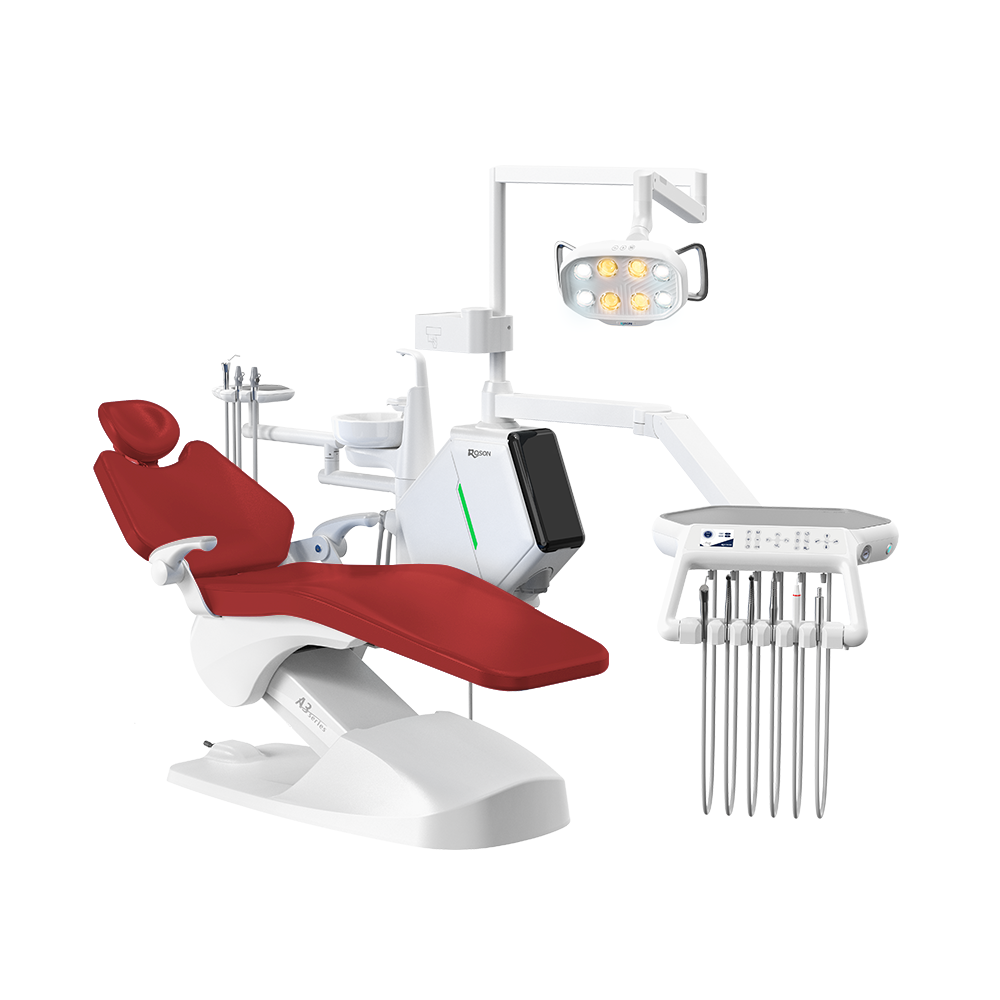
The flagship Roson dental unit Model A3 demonstrates this technological progression through its streamlined instrument tray assembly. Featuring balanced arm mechanisms and customizable position locks, the unit ensures effortless positioning, allowing practitioners to access vital tools without disrupting line-of-sight during delicate procedures.
Integrated microprocessors continuously monitor component performance and diagnostic feedback across all active lines. Smart sensors detect pressure fluctuations or electrical anomalies instantly, alerting technical staff before operational issues occur, thereby maintaining more‑stable workflow continuity and prolonging overall equipment life in busy practice settings.
Ergonomic Motion Dynamics and Patient Support Engineering
Patient chair mechanics have evolved significantly to prioritize both practitioner access and patient relaxation. Synchronized motor drives adjust the backrest and seat frame in tandem, minimizing uncomfortable spine compression and maintaining steady anatomical support as patients transition into reclined treatment positions.
Ultra-quiet electric actuators power smooth height adjustments, creating a tranquil environment for anxious patients. Lower minimum seat elevations facilitate easy entry for elderly or mobility-impaired individuals, while elevated upper ranges allow standing clinicians to maintain optimal posture during extended surgical interventions.
Integrating ergonomic positioning features into the Roson dental unit optimizes clinician posture throughout long working days. Multi-articulating headrests offer precise cervical support, enabling comfortable positioning for pediatric or adult patients while reducing neck and shoulder strain for operating dental professionals.
Compact base designs further maximize available floor space around the operating field. Streamlined footprints allow clinicians and support staff to maneuver freely around the patient, improving team communication and accelerating procedural steps during fast-paced restorative and hygiene treatments.
Advanced Infection Control and Automated Water Sanitation
Infection control innovation remains a cornerstone of modern operatory engineering. Upgraded water purification modules incorporate automated disinfection loops, continuously circulating sanitizing agents through internal conduits to prevent biofilm formation and maintain pristine water quality across all dynamic handpiece lines.
Smooth, seamless exterior surfaces minimize hard-to-clean crevices where debris might collect. Utilizing chemical-resistant, high-impact composite materials ensures external housings withstand rigorous daily contact with hospital-grade surface disinfectants without yellowing, cracking, or losing their original aesthetic appeal over years of use.
Equipment engineered by Roson incorporates detachable, autoclavable instrument handles and silicon tray pads. Facilitating rapid sterilization turnover between patient appointments enhances cross-contamination defense while streamlining room preparation routines for clinical support personnel during busy operational schedules.
Non-contact sensor controls for operating lights and cup fillers further reduce physical touch points within the treatment zone. Hands-free actuation minimizes cross-contamination risks, supporting strict hygiene protocols and providing patients with visual reassurance of the facility’s commitment to safety.
Automated Evacuation Systems and Environmental Compliance
Modern fluid evacuation architecture has advanced to offer higher suction efficiency with lower power consumption. Dynamic vacuum regulators automatically adjust air volume based on real-time usage, delivering powerful aspiration during high-volume scaling or extraction procedures while conserving energy during routine examinations.
Integrated amalgam separation technology ensures compliance with stringent global environmental directives. Efficient separation canisters capture fine particulate waste before fluid enters municipal drainage lines, allowing dental facilities to meet strict environmental regulations effortlessly without requiring complex external filtration hardware installations.
The robust design of each Roson workstation reflects a commitment to sustainable, long-term performance. Upgraded internal manifolds and durable check valves resist chemical corrosion from aspiration cleansers, guaranteeing consistent vacuum pressure and preventing backflow during intensive clinical treatments.
Quiet air-water separation canisters housed within the utility box reduce operational noise levels significantly. Muffling exhaust sounds creates a quieter operatory atmosphere, alleviating patient anxiety and fostering a calmer working environment for the entire clinical team throughout the day.
Future Outlook for Modern Clinical Workstations
Continuous technological refinement ensures that modern dental units remain adaptable to emerging digital dentistry trends. Modular internal architectures allow easy integration of intraoral scanners, electric micromotors, and advanced diagnostic tools, preserving equipment relevance as clinical techniques and practice requirements evolve.
Procuring advanced workstations represents a strategic investment in practice growth and patient satisfaction. Equipping treatment rooms with an innovative Roson dental unit enhances operational precision, elevates infection control standards, and projects a modern, professional image to discerning patients seeking quality care.
Ultimately, ongoing innovations in workstation engineering bridge the gap between complex technology and intuitive clinical practice. Sourcing reliable equipment from established brands like Roson ensures practices maintain peak productivity, superior ergonomic safety, and uncompromised patient care standards well into the future.