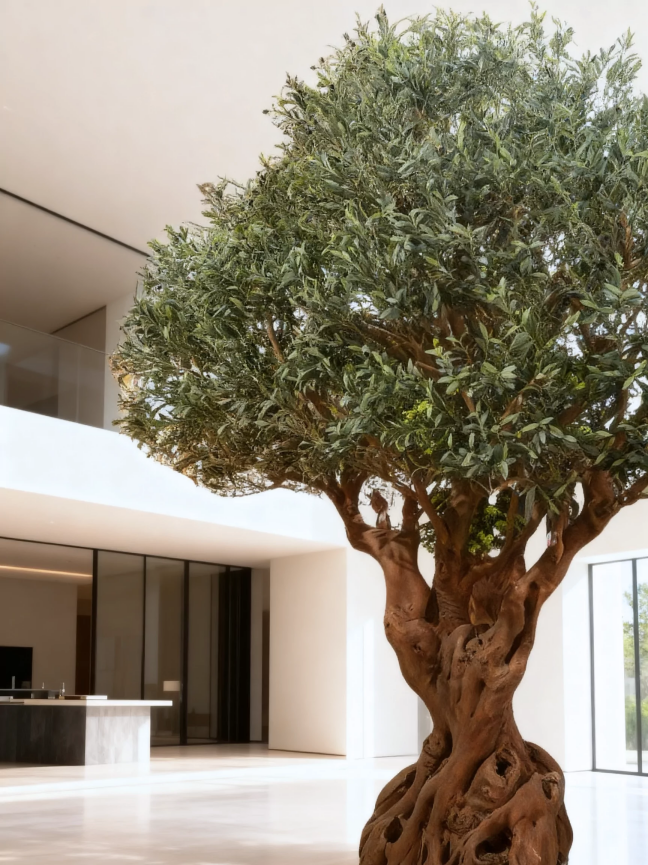
Modern decoration continuously evolves to meet commercial demands. Designers and business owners seek elements combining visual appeal with low maintenance. Faux greenery has emerged as a practical solution. High-quality faux foliage can transform a sterile area into an inviting space. To achieve the desired effect, buyers must understand the available variations and specifications.
Understanding the different types of faux greenery helps in making informed purchasing decisions. The variety available today caters to almost every architectural requirement. From subtle desk accents to towering botanical installations, the options are extensive. A reputable manufacturer like Sharetrade provides diverse categories to suit specific commercial applications.
Exploring the Types of Faux Greenery Provided by Sharetrade
Artificial trees represent a major category in modern decorative elements. Large specimens, such as faux olive trees, palm trees, and ficus varieties, serve as structural focal points. These items are frequently utilized in spacious areas like shopping mall atriums and hotel lobbies. Sharetrade manufactures these trees with meticulous attention to detail, ensuring realistic trunk textures and leaf structures.
Artificial greenery walls have gained significant traction in corporate and retail branding. These vertical installations provide a lush backdrop for company logos or product displays. They maximize space utilization while delivering a strong visual impact. The structural integrity of these walls relies on durable backing and densely packed faux foliage. Sharetrade offers customizable wall solutions designed for both interior and exterior environments.
Key Features to Evaluate from Artificial Plants Wholesale Suppliers
When selecting decorative elements for commercial projects, material specifications are important. The visual realism of faux foliage depends on advanced techniques, such as leaf molding and trunk coating. High-quality products should resist fading when exposed to sunlight. To address this, industry leaders incorporate UV-resistant properties into their processes. Buyers often request UV-resistant test reports to verify outdoor durability.
Safety regulations in commercial buildings dictate strict standards for decorative materials. Fire retardant properties are often mandatory for installations in public spaces like hotels and shopping centers. Reliable manufacturers integrate fire-resistant materials directly into the foliage during production. This ensures the products meet necessary safety compliance codes without compromising their lifelike appearance. It is a critical feature to confirm during the procurement process.
Customization capabilities define the value of experienced artificial plant wholesale supplier. Commercial projects rarely rely on generic solutions. Form, structure, size, and color often need adjustments to align with specific brand identities. A competent factory will support OEM and ODM services, developing custom molds and branch densities. This flexibility allows designers to achieve their precise vision for any given space.
Applications of Sharetrade Products in Modern Decoration
The hospitality industry frequently utilizes faux botanical installations to enhance guest experiences. Resorts and hotels deploy artificial trees in dining areas and lobbies to establish a premium atmosphere. These environments benefit from greenery that requires zero watering or specialized lighting. Sharetrade supplies custom solutions that help hospitality venues maintain a consistent, high end aesthetic throughout the year, regardless of seasonal changes.
Retail environments leverage faux botanical displays to highlight merchandise. Permanent in store installations draw attention and enhance the shopping experience. Large artificial trees serve as central landmarks within expansive shopping malls. This low maintenance decor ensures retail staff can focus entirely on customer service.
Sourcing Strategies and Manufacturing Specifications
Effective procurement requires partnering with a facility capable of large scale, consistent production. Sharetrade operates a 28,000 square meter factory in Dongguan, China, providing a monthly capacity of 30,000 plants. This scale ensures stable production timelines for global buyers. Their manufacturing process includes strict quality control measures, such as drop tests and material inspections, aligning with international standards.
Certification is a reliable indicator of product quality and ethical manufacturing. Buyers should verify the relevance and scope of each supplier’s credentials. BSCI relates to social compliance assessments, FSC applies to eligible forest-based materials and supply chains, ISO 9001 addresses quality management systems, and REACH and RoHS concern chemical requirements. Verifying these documents helps buyers mitigate risks when importing large quantities of decorative items for commercial development.
Logistics and packaging also impact the final quality and cost of imported decor. Innovative detachable designs help minimize packaging volume, which optimizes container space and reduces shipping expenses. Utilizing drop tested packaging ensures that delicate faux branches and trunks arrive intact. Suppliers offering flexible lead times, typically ranging from 14 to 45 days, provide necessary agility for project management.
The Future of Commercial Faux Decor
Integrating faux botanicals into commercial architecture represents a practical, long term design strategy. As manufacturing technologies advance, the distinction between natural and engineered foliage narrows. Businesses can achieve complex botanical designs without the limitations of climate or ongoing maintenance budgets. This evolution solidifies the role of engineered greenery in modern structural planning.
Selecting the right manufacturing partner is crucial for realizing these design concepts. Companies must evaluate suppliers based on their production capacity, customization options, and material certifications. By establishing relationships with experienced entities in this sector, project managers can secure high quality decorative elements. This strategic approach ensures that commercial spaces remain visually engaging and operationally efficient for years to come.