A conveyor belt joint may look like a small component in a production line, but its design affects installation, belt movement, maintenance, and replacement work. This is why industrial fastener manufacturers do not rely on one universal fastening style. Conveyor belts differ in thickness, material, pulley diameter, operating environment, speed, and production requirements. A fastener selected for a light-duty logistics belt may not be appropriate for a filter mesh or laundry application.
For procurement teams, working with a belt fastener manufacturer that offers multiple fastening configurations can simplify supplier evaluation. Instead of treating the fastener as a commodity, buyers can compare material, hook design, belt compatibility, installation method, and service support against the actual operating conditions.
How Conveyor Applications Create Different Fastener Requirements
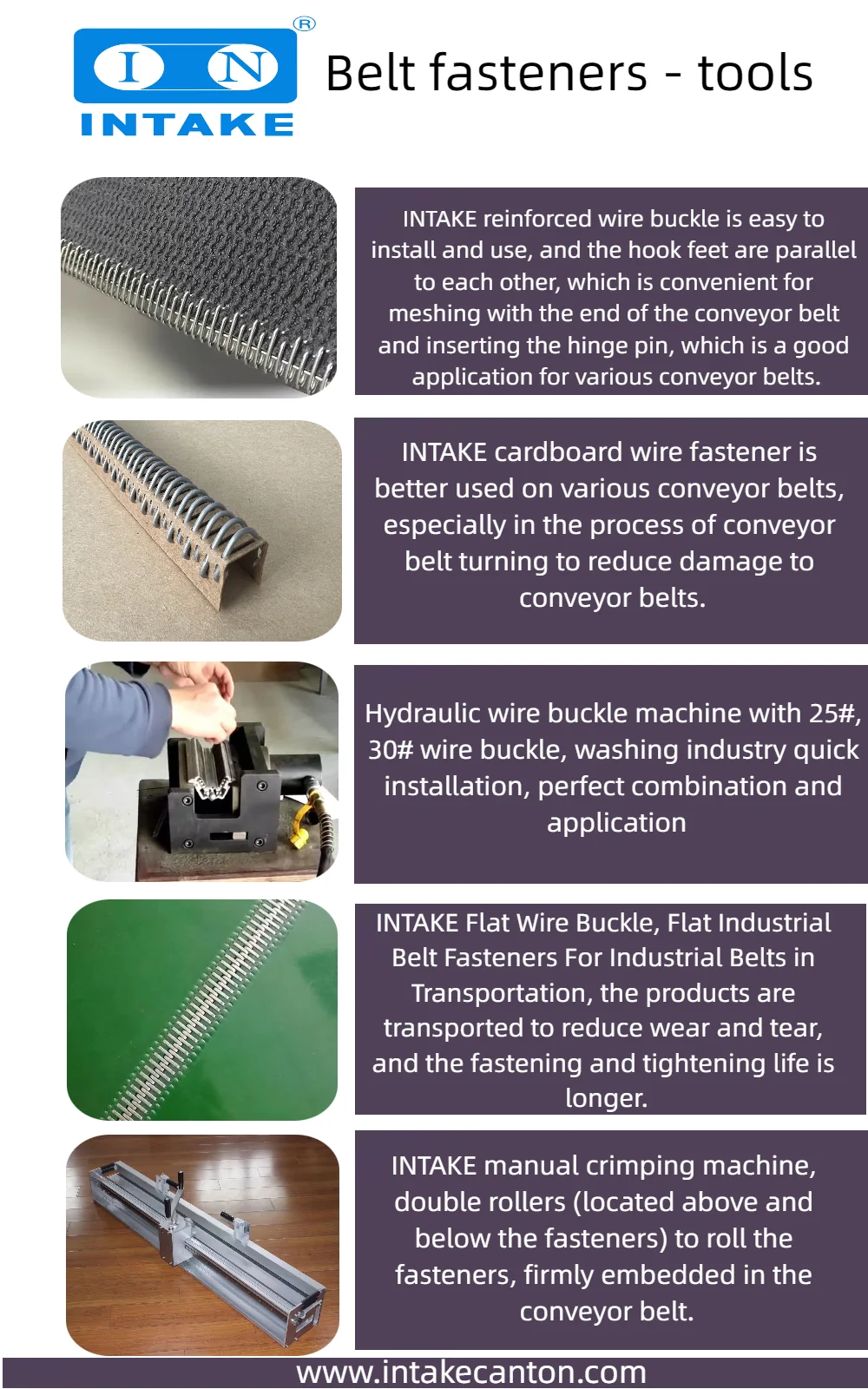
The first factor is belt construction. Lightweight conveyor belts often require a low-profile joint that can pass smoothly around smaller pulleys without creating unnecessary interference. Intake’s product range includes wire hook fastening systems and carded fastening systems designed for different belt requirements. Its wire hook systems are available in different wire diameters, materials, strip lengths, and styles, allowing manufacturers to match the fastening solution to the belt and application.
Pulley diameter is another practical consideration. A joint that works on a large conveyor pulley may not perform the same way on a compact conveyor. For example, Intake lists the Wire Hook Fastener 86030 with 316L material, 120 hooks per 12 inches, a 1.0–2.0 mm belt thickness range, a 47 mm minimum pulley diameter, an approximate 1.2–1.6 mm hinge pin diameter, and a 0.8 mm wire diameter. These specifications give buyers measurable criteria for evaluating compatibility instead of relying on general descriptions.
Operating environment also changes material selection. Conveyor systems exposed to moisture, washing processes, or demanding industrial conditions may require stainless-steel fastening components. Intake lists products made from 304S, 316L, and other materials across its product range. For example, the CR Series uses 316L stainless steel with galvanized steel. Material selection should be evaluated together with belt construction and the environment in which the joint will operate.
Why Industrial Fastener Manufacturers Offer Multiple Product Systems
Industrial fastener manufacturers typically need to support more than one installation method because conveyor producers and maintenance teams have different production setups. Some operations require machine-applied fastening for consistent installation, while others may need manual or hydraulic equipment for specific production volumes or field work.
Intake’s product portfolio reflects this broader requirement. Its product categories include belt fastener systems as well as manual and hydraulic machine systems. The range includes carded wire belt fasteners, reinforced wire hook fasteners, CR Series fasteners, hinge pins, carded fastening systems, wire hook fasteners, hydraulic belt fastener machines, and manual roller lacers. This combination allows buyers to evaluate the fastening component together with the installation process.
For manufacturers of light-duty conveyor belts, consistency during installation can be particularly important. The same principle applies to replacement planning, because a joint that is easy to install and correctly matched to the belt can reduce avoidable disruption during routine maintenance. A suitable fastening system needs to create a secure connection while maintaining the belt’s operating profile. Intake describes its wire hook systems as low-profile designs intended to reduce interference with conveyor rollers and support smooth belt operation. This type of design can be relevant to logistics, packaging, filter mesh, and other applications where belt movement and joint profile matter.
What B2B Buyers Should Compare Before Selecting a Supplier
A purchasing decision should begin with technical compatibility rather than price alone. Buyers can request the exact belt thickness range, fastener material, hook density or design, minimum pulley diameter, hinge pin dimensions, and recommended installation method for each candidate product.
Production capability is also important when the fastener becomes a recurring component in a customer’s own manufacturing process. A belt fastener manufacturer with independent R&D, dedicated production equipment, customization capability, and technical support can provide more flexibility when standard products do not match a particular belt specification. Sample availability is another useful step for qualification because manufacturers can test the joint on their own belt before committing to larger volumes.
Lead time and after-sales support also matter. Conveyor belt manufacturers serving logistics, washing, filter mesh, or corrugated applications may have to respond quickly to replacement or production requirements. Intake states that standard orders can be shipped within three days after confirmation, while customized products generally require about one week. Its stated services also include pre-sales and after-sales support, customization, free samples, and operational video tutorials.
Building a More Application-Specific Fastener Supply Strategy
The role of industrial fastener manufacturers is therefore broader than supplying a single metal component. Different conveyor applications create different requirements for belt thickness, pulley size, material resistance, joint profile, installation method, and production volume. A supplier with a broader product range can help buyers narrow those variables before selecting a fastening system.
Intake has focused on industrial belt fasteners since 1999 and serves applications including environmental protection, logistics, and laundry equipment. Its product portfolio covers wire hook and carded fastening systems alongside installation equipment, providing a practical basis for application-specific sourcing.
For filter mesh manufacturers, washing belt producers, and light-duty industrial conveyor belt manufacturers, the most useful supplier is not necessarily the one offering the largest catalog. The stronger fit is a manufacturer that can connect product specifications with the actual belt, equipment, and operating conditions. Comparing technical data, samples, customization options, delivery capability, and service support can help procurement teams build a more reliable fastening supply strategy.