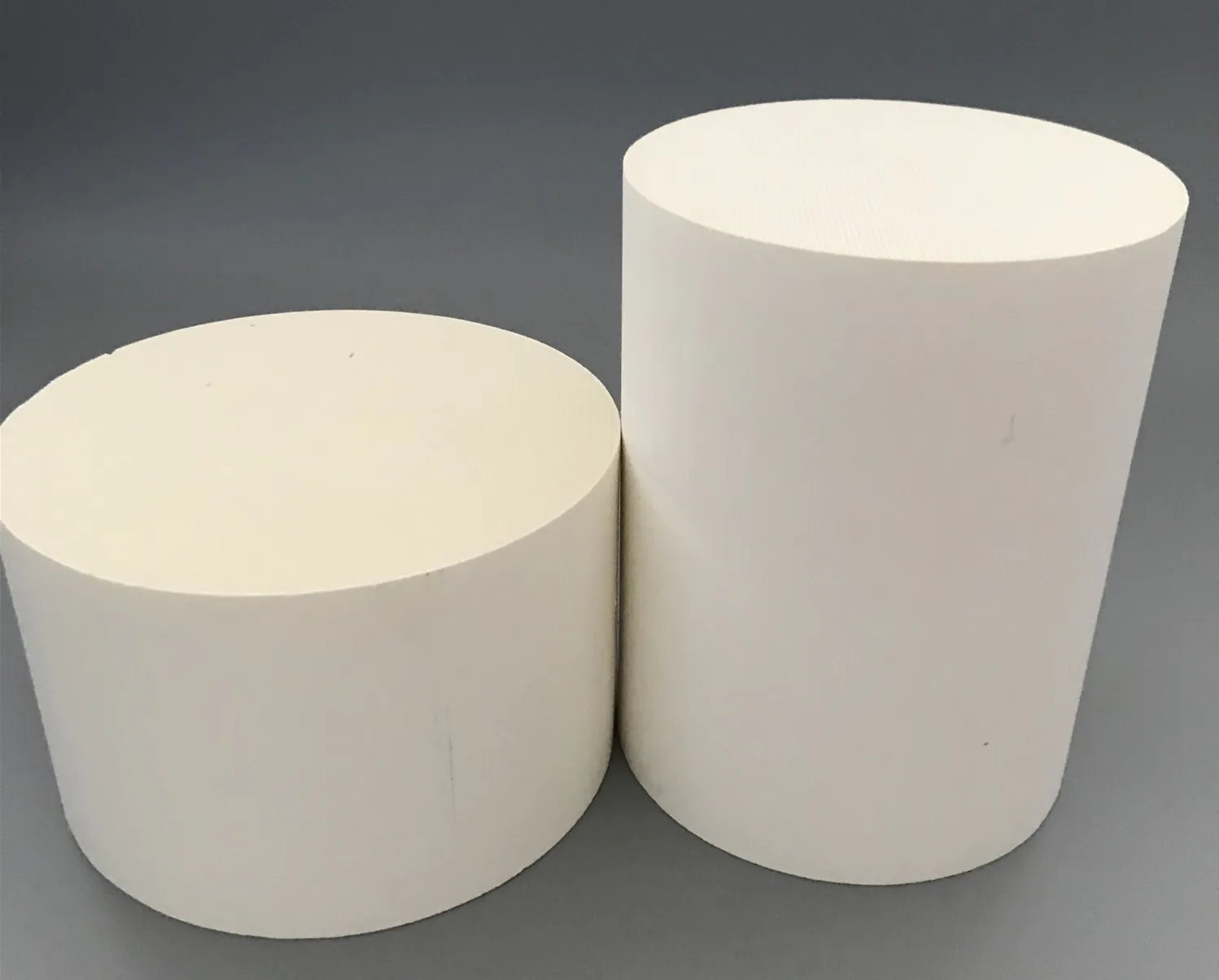
Choosing substrates for an emission control system often begins with a specification sheet, but the figures on that sheet become useful only when the supplier can explain how they were produced and what trade-offs they carry. Procurement teams and system integrators who look beyond headline values tend to identify dependable partners more consistently than those comparing catalogue numbers alone. Working with Hualian Catalyst can provide a practical reference point because its product information is organised around application requirements rather than isolated figures. This article outlines considerations that may help buyers structure that evaluation.
Clarifying the Application Before Comparing Specifications
Before comparing substrate options, it is worth defining the operating conditions that will shape the selection. Exhaust flow rate, temperature cycling pattern, available installation space, and the expected service interval all influence which channel geometry and material grade are appropriate. A substrate that suits a compact underfloor compartment may not suit a stationary power application with different vibration and thermal profiles. Documenting these conditions first gives the supplier a clearer basis for recommending a configuration and helps avoid later changes to tooling or canning design.
Flow behaviour deserves particular attention because it links substrate geometry to system efficiency. A channel structure that creates excessive backpressure can affect engine efficiency, while a design that prioritises low resistance may need to be checked for structural strength. These considerations are interrelated rather than separate, and a supplier that can discuss them together is often better placed to propose a balanced configuration. Buyers may find it useful to ask how a proposed substrate is expected to behave across the intended flow range rather than at a single operating point.
Thermal and mechanical demands should also be reviewed alongside the installation method. Canning and mounting arrangements influence the mechanical loads that reach the ceramic body, and the substrate specification may need to account for those loads. Raising these points early in the discussion can help the supplier identify whether a standard configuration is suitable or whether a modified profile is more appropriate. This preliminary stage is less about obtaining a quotation and more about establishing the criteria against which later proposals will be judged.
Reading Published Data in Its Test Context
Published substrate data commonly includes water absorption, coefficient of thermal expansion, and compressive strength, but each figure gains practical meaning only when the measurement conditions are stated. A catalyst supplier that explains how those values were obtained, and over what interval or direction they apply, gives buyers a more useful basis for comparison than one that presents final numbers without context. Water absorption, for example, is relevant to washcoat adhesion, yet the same broad range can reflect different pore structures depending on raw material selection and firing profile. Asking how a value was measured is often more informative than comparing it in isolation.
Compressive strength data also benefits from directional context, since axial and radial loading conditions differ in service. A substrate may perform well under one loading direction while being more sensitive under another, particularly after canning. Discussing how strength data relates to the intended mounting arrangement can help buyers judge whether a proposed substrate is likely to remain stable under continuous operation. This is a matter of matching data to application rather than seeking the highest published value.
Treating Cell Density and Geometry as Trade-Offs
Cell density is sometimes treated as a straightforward quality indicator, with higher channel counts assumed to be preferable. In practice the relationship is conditional. Denser channel structures can increase surface area within a given volume, which may support conversion activity, but they can also raise flow resistance and place different demands on coating uniformity. Thinner walls may reduce backpressure in some configurations while affecting mechanical strength. A supplier offering a range of channel configurations is therefore presenting different positions along a trade-off rather than a simple ladder of better options.
The appropriate choice depends on how the substrate will be used. Applications with generous installation space and moderate flow demands may tolerate a different configuration from those with tight packaging and high flow rates. Coating requirements also matter, because a washcoat needs to be applied evenly across the channel structure to support consistent catalytic behaviour. Buyers may find it useful to ask how a proposed cell density interacts with the intended washcoat and whether the combination has been considered as a system rather than as separate specifications.
Outer profile and cross-sectional shape form another part of the same discussion. Round, oval, racetrack, and custom profiles can help fit a substrate into available space, but a change in profile may affect flow distribution and canning loads. A supplier that reviews these factors together can help buyers avoid a geometry that fits the drawing but performs less predictably in service. The aim is a configuration that matches the installation and operating envelope, not one that maximises a single published parameter.
Using Customization and Documentation as Selection Signals
Hualian Catalyst provides original equipment manufacturer (OEM) and original design manufacturer (ODM) support for its Honeycomb Ceramic catalytic converter range, including substrate dimensions aligned with standard emission configurations from Euro 2 through Euro 6. A productive customization review usually addresses installation constraints, flow distribution, coating compatibility, and canning loads before production begins. A supplier that treats these points as a joint technical review, rather than a menu of options, is better positioned to identify interacting variables early.
Documentation quality can also serve as a selection signal. Inspection criteria, composition ranges, and lot traceability practices indicate whether a supplier manages variation through process control or through end-of-line sorting. Routine checks on wall integrity and dimensional tolerance are common in substrate manufacturing, but the scope of those checks and the willingness to share them can be more telling than a general statement of quality commitment. Buyers may wish to request a clear description of the inspection steps applied to a production lot and how results are recorded.
It is also reasonable to ask how the supplier handles specification changes after a component has been approved. A process for documenting revisions and communicating them to customers can help reduce the risk of silent drift between deliveries. This is particularly relevant for buyers placing repeat orders over an extended period, where consistency across lots may matter as much as the initial sample performance. A supplier that can describe this process clearly offers a more predictable supply relationship.
Finally, choosing a supplier on this basis is less about finding the lowest quoted figure and more about establishing a working relationship in which technical claims can be traced, questioned, and verified. The considerations outlined here are intended to support that process rather than replace direct technical dialogue. Buyers who combine application-specific questions with a review of published data and documentation are likely to make more informed comparisons and to reduce the risk of a substrate that meets drawing tolerances but behaves differently in service.