Public spaces communicate a lot before visitors notice the shops, landscaping, or buildings around them. Dusty paving, leaves at curb edges, drink residue, and windblown packaging can make a plaza feel neglected even when the surrounding facilities are well maintained.
Regular cleaning gives streets, parks, walkways, and transit areas a more cared-for appearance. These details influence how people judge a place’s upkeep, whether they are entering a shopping district, crossing a campus, or resting in a park.
Appearance is not just about removing large pieces of litter. Fine dust can dull the color of paving, grime can build up around benches and entrances, and small scraps often collect along walls or in narrow corners. If teams remove only obvious debris, these details remain.
Why Consistent Surface Cleaning Matters
People form quick impressions of public areas. Clean walkways can support a more positive experience for pedestrians, customers, and commuters, while scattered debris can make a location seem poorly managed. Routines also address predictable sources of mess, including foot traffic, wind, and seasonal leaves.
A clean-looking surface depends on both the frequency of maintenance and the method used. Sweeping gathers larger debris, while vacuum collection can draw loose dust and smaller particles away from the pavement.
Water spraying or pressure washing can address certain marks and residues that dry collection does not remove on its own. The mix depends on the surface, dirt, and local rules.
How a Street Vacuum Supports a Cleaner Finish
A street vacuum uses suction to collect dry debris instead of simply pushing it along the ground. That matters in places where fine dust, grit, leaf fragments, and small litter accumulate together. When debris is captured in a collection bin, fewer visible particles remain scattered along the route or are left to drift back across the surface.
Dust control also influences how clean an area looks during and after maintenance. A cleaning machine that combines suction with misting can help limit dust from becoming airborne while loose material is collected. This supports a tidier appearance between deeper cleaning sessions.
The machine’s route matters as much as its collection system. Operators can pay attention to curb lines, the edges of pedestrian paths, plaza entrances, loading areas, and places where litter tends to gather. Planned passes keep surfaces more consistent and reduce visibly dirty edges.
Match Cleaning Methods to the Place
Different public spaces collect different kinds of debris. Parks often accumulate leaves, soil, and fine grit near paths and seating areas. Commercial streets gather paper packaging, food-related litter, and dust around storefronts. Transit hubs experience continuous pedestrian movement, so dirt can quickly reappear around entrances and waiting zones.
A practical schedule should reflect these patterns. High-traffic routes often benefit from more frequent light cleaning, while quieter paths might need routine sweeping and focused attention after storms, landscaping, or public events. Before washing, crews should consider drying time, pedestrian access, drainage, and surface material.
A street vacuum cleaner can form part of this broader plan, rather than serving as a substitute for every maintenance task. Staff still need to empty bins, refill water, inspect equipment, and remove waste too large for the machine.
What the Greendorph YJ80 Brings to Urban Maintenance
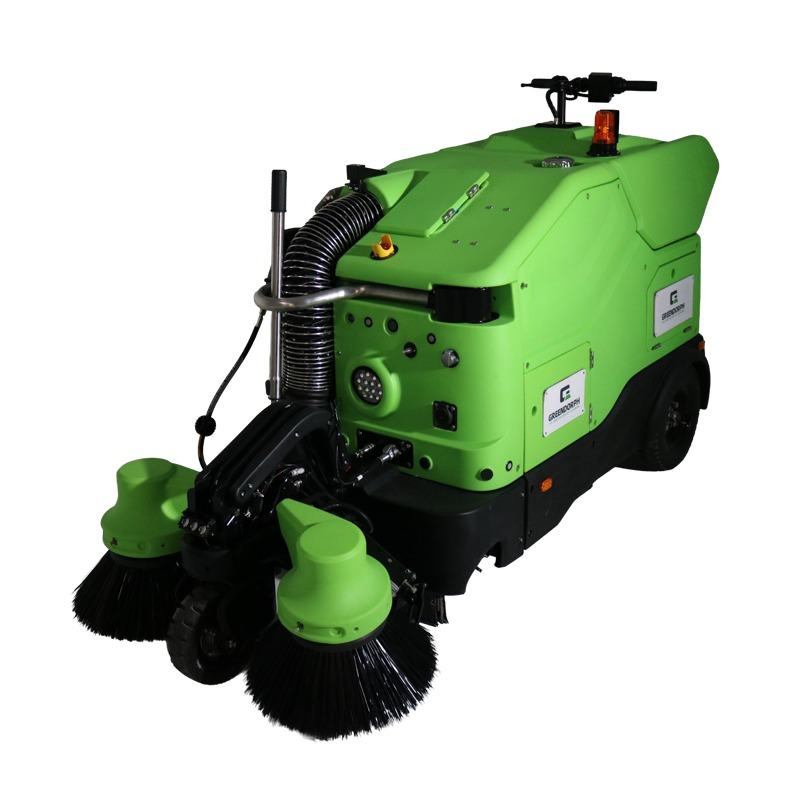
The YJ80 from Greendorph combines negative-pressure suction with sweeping, blowing, water spraying, dust-suppression misting, and high-pressure water washing. Its listed cleaning width is 140 cm, and its rated cleaning efficiency is up to 10,800 m² per hour. Actual coverage depends on route layout, surface conditions, debris levels, and the time needed for refilling or collection.
This vacuum street sweeper has an average operating time of 6-8 hours and is equipped with a 120 L water tank. The machine also offers manual ride-on, auto-following, and towed-traction modes, allowing teams to choose an operating approach that fits the site. Its electric drive supports outdoor cleaning without direct exhaust emissions from the machine during operation.
These features are relevant when public-space appearance depends on regular maintenance across more than one type of area. A compact unit can move between sidewalks, pedestrian plazas, parking structures, and other medium-sized outdoor zones, while its wet and dry functions give crews several ways to address surface conditions. Teams should assess each site before selecting equipment.
Make Appearance Part of a Repeatable Routine
A clear maintenance plan should define priority zones, cleaning frequency, debris handling, and inspection steps. Teams can record recurring problem spots, then adjust routes as seasons and foot traffic change. Post-cleaning checks reveal missed edges or residue that needs another method.
A dependable street vacuum cleaner can support this routine by collecting loose debris, helping control dust, and combining several surface-care functions in one machine. Scheduling and operator checks help public areas stay neat between major cleanups.
Clean public spaces are shaped by consistent attention to small details. Matching the equipment to the debris, the surface, and the level of pedestrian activity helps maintenance teams create streets and shared areas that look orderly, cared for, and ready for use.