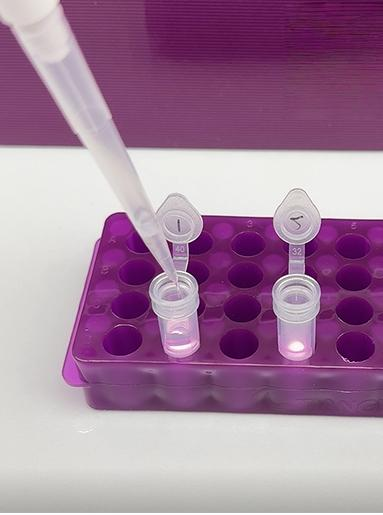
Nucleic acid extraction is a fundamental procedure in molecular biology that focuses on isolating DNA or RNA from biological materials such as cells, tissues, blood, or microorganisms. Nucleic acids are essential biomolecules present in all living organisms, responsible for storing genetic information, transmitting hereditary traits, and guiding protein synthesis. Because of their central biological role, obtaining nucleic acids with adequate purity and integrity is necessary for many laboratory workflows. In this context, nucleic acid extraction refers not only to separating these molecules from complex biological matrices but also to maintaining their stability throughout the process.
Core Principles of Nucleic Acid Extraction
The process of nucleic acid extraction generally follows a series of structured steps designed to release and purify DNA or RNA. The first step is cell lysis, during which cellular membranes and structures are disrupted to release nucleic acids into solution. This is typically achieved using chemical buffers and, in some cases, enzymatic treatment. Following lysis, nucleic acids are separated from proteins, lipids, and other cellular components through selective binding or phase separation. Washing steps are then performed to remove residual impurities and contaminants, improving the overall quality of the extracted material. The final step is elution, in which purified nucleic acids are recovered in an appropriate buffer. Each stage of nucleic acid extraction contributes to determining the final yield and purity.
Common Methods and Technological Approaches
Several widely used methods support nucleic acid extraction, each based on different principles. Column-based purification relies on silica membranes that bind nucleic acids under specific salt conditions and release them when conditions change, offering a simple and consistent workflow. Magnetic bead-based methods use functionalized particles that bind nucleic acids and can be manipulated with magnetic fields, enabling automated and high-throughput processing. In addition, traditional precipitation methods employ organic solvents and alcohol to isolate nucleic acids, which may be suitable in certain laboratory settings. The choice of nucleic acid extraction method depends on sample type, throughput requirements, and desired purity levels.
Final Remarks
Overall, nucleic acid extraction is a systematic process that enables the isolation of DNA and RNA from diverse biological samples while maintaining their structural integrity. TIANGEN Biotech (Beijing) Co., Ltd. provides comprehensive nucleic acid purification solutions, supporting standardized downstream applications such as PCR and sequencing.