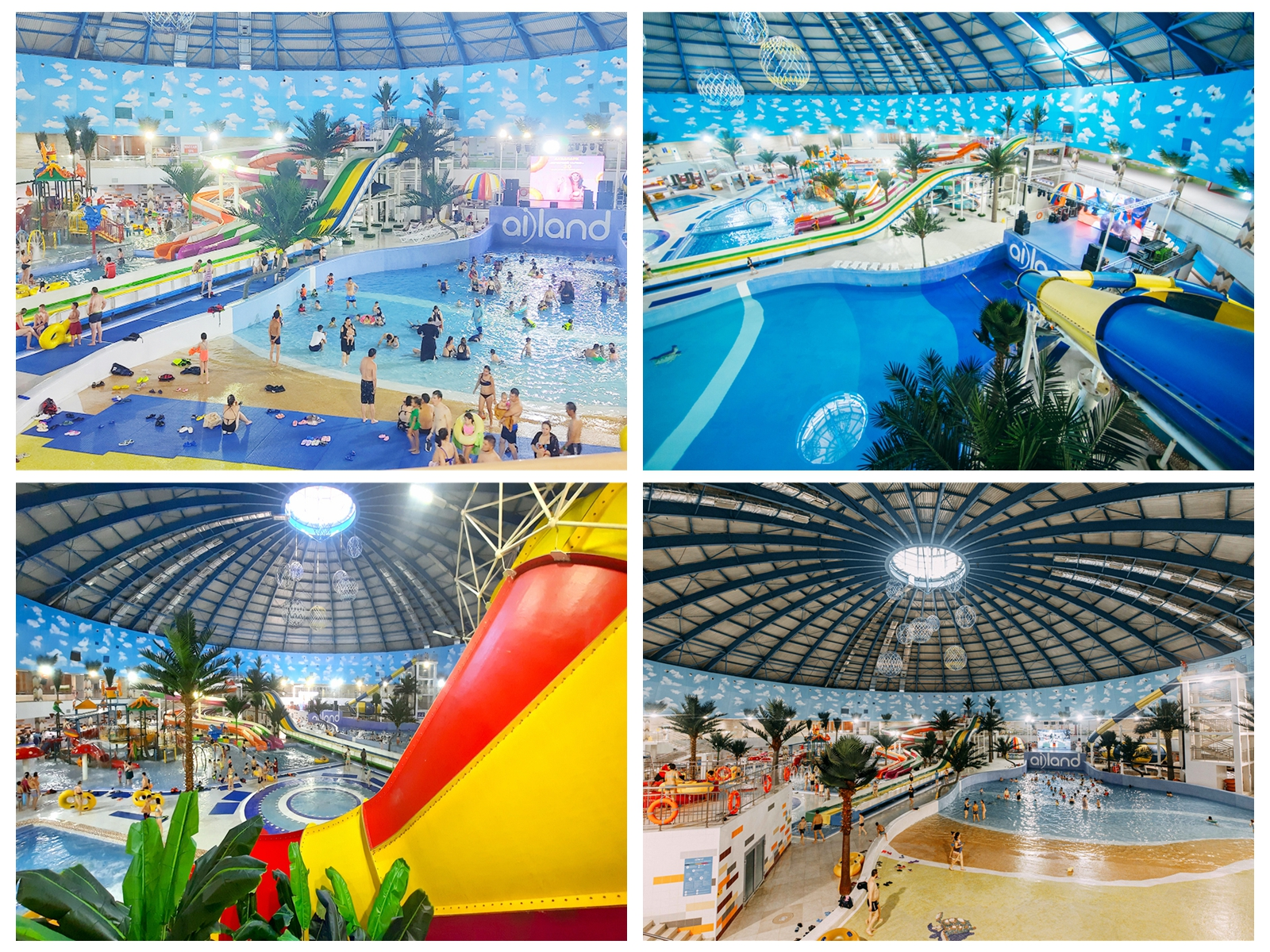
Season length belongs in the indoor-versus-outdoor decision before individual rides enter the discussion. An enclosed venue brings the building and its internal environment into the operating plan. An open-air scheme depends more directly on the land, weather and period for which the attraction is intended to trade.
Comparing water park designs therefore involves two complete development proposals. The attractions may look similar on an equipment schedule, while the surrounding construction and daily work differ. An indoor water park design needs a credible building solution; an outdoor proposal needs an equally credible site and seasonal plan.
Compare the Experience and the Operating Conditions
Enclosure changes the setting in which visitors use the attractions. Roofs, columns and internal routes establish a defined building environment. Outside, views, shade and the relationship between attractions and landscape become more prominent. Neither setting identifies the experience without an attraction mix and an intended audience.
| Format | Experience | Cost considerations | Potential setting |
| Indoor | Attractions within an enclosed environment | Building envelope, ventilation and humidity control | A project with a suitable building and an indoor operating plan |
| Outdoor | Attractions connected across open-air space | Ground preparation, drainage, paths and shade | A site whose climate and intended season support outdoor use |
The comparison for indoor water park design includes the work required to maintain the internal environment. Enclosure provides a different operating condition, but it does not demonstrate demand for every available opening day. The proposed calendar still needs an audience and a staffing arrangement.
Outdoor operation can be seasonal in many regions. The brief can state the intended opening period and examine how weather relates to it. An appealing summer layout and a credible annual programme are separate parts of the development decision, even when they concern the same attractions.
Build Two Budgets around the Same Attraction Brief
A comparison becomes more informative when both proposals begin with the same intended visitor experience. The budget can then expose what changes because of the format, rather than hiding differences in ride selection inside two headline totals. Each scheme needs its own construction and installation scope.
For outdoor water park designs, grading, drainage, pool construction, foundations, paths, landscaping and utilities extend the work beyond equipment supply. Rainfall, ground conditions and shade requirements influence that package. Equipment delivery and crane access also need to remain possible while those works proceed.
The supply discussion with a water slide maker can identify where its equipment package meets the building or local site works. Jinchao offers customised design and manufacturing from an approximately 36,000 m² production base. The budget assigns those services beside building works and local installation resources.
Indoor budgets also include guest facilities, logistics and pre-opening work alongside attractions and building services. A contractor’s completed shell is only one part of that programme. The comparison needs to identify which later tasks remain before the planned attraction mix can operate inside it.
Use a Building Reference for the Question It Answers
One relevant building reference for investors is Jinchao’s Kazakhstan project, an indoor park covering approximately 12,000 m². Racing attractions, bowl slides and wave pools are among its equipment. The useful evidence concerns coordinating that combination within the building recorded in the case.
An existing building can make enclosure a design constraint rather than a free choice. The comparison must then include its measured condition, while a new structure remains a separate construction task.
A reference for indoor water park design needs comparison with the proposed building. Roof clearance, columns, delivery openings and lifting routes can differ even where the total areas are similar. Roof and access checks can therefore rule out a copied arrangement before equipment selection begins.
Jinchao’s experience across more than 300 developments provides a wider set of project backgrounds to examine. A water slide maker can discuss the selected equipment against the actual building information. The enquiry can name the constraint for which a relevant example is being requested.
Reference selection can be equally specific for an outdoor scheme. A project involving substantial ground preparation needs evidence relevant to that task. An attraction photograph cannot establish the extent of the local civil package or the resources required to install equipment on a different site.
Make the Format Decision Conditional on the Project
Both water park designs can be tested against the intended season, available space, construction resources and operating responsibilities. Indoor development merits attention where the building and internal environment can support the planned offer. Outdoor development merits attention where the land and seasonal use form a workable proposal.
Conditions in the design brief can guide the final configuration discussed with a water slide maker. Jinchao’s site-based planning can connect the attraction selection with the chosen setting. Neither a large equipment catalogue nor a favourable single quotation resolves the format decision on its own.
If the planned calendar relies on trading outside the local outdoor season, the indoor case needs to explain which building and operating resources make those sessions possible. If attendance is concentrated in a shorter period, the outdoor case needs an operating plan for that pattern.
An investor can carry the preferred option forward with its assumptions still visible: the proposed calendar, local works, equipment package and responsibilities for delivery. The format is ready for detailed development when those parts describe the same project, rather than two attractive but incomplete alternatives.