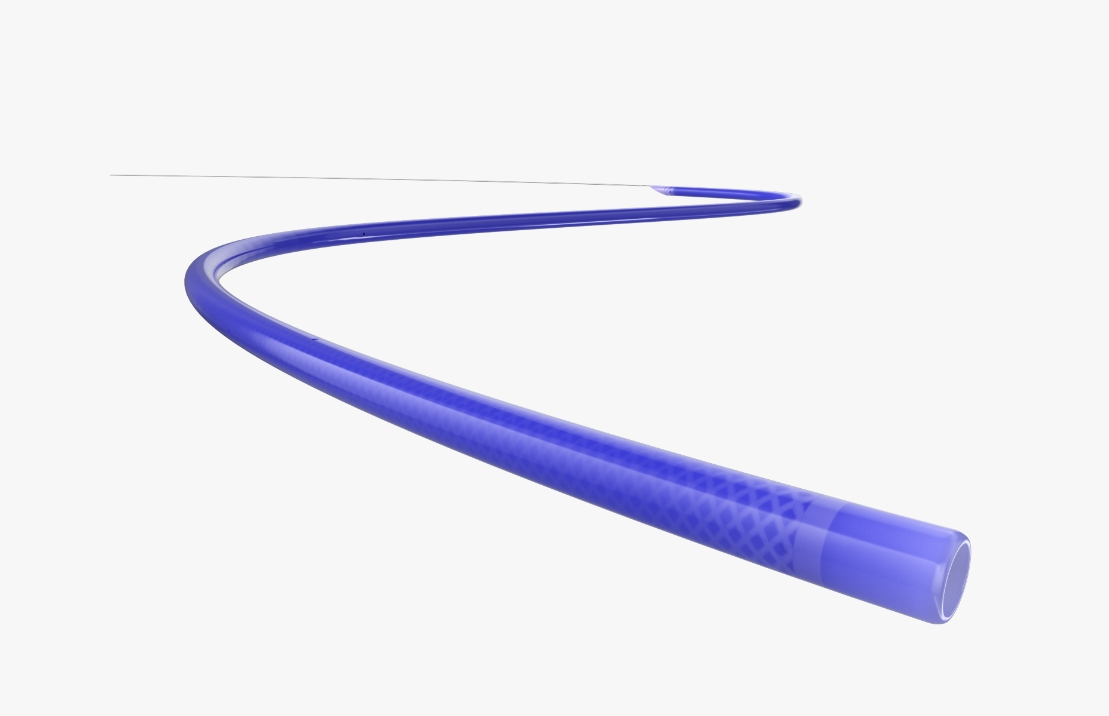
In interventional cardiology, successful device delivery depends on more than selecting the appropriate guide catheter. Complex coronary anatomy, severe vessel tortuosity, and challenging lesions can make it difficult to advance interventional devices to the target location. A guide extension catheter helps address these challenges by extending the reach of the guiding catheter and providing additional support during device delivery.
As an important category of interventional medical devices, guide extension catheters are used in selected percutaneous coronary intervention (PCI) procedures to facilitate the delivery of devices such as balloons and stents. For hospitals, catheterization laboratories, and medical device distributors, understanding their functions, design characteristics, and clinical applications is essential when evaluating cardiovascular product portfolios.
How Does a Guide Extension Catheter Work?
A guide extension catheter is designed to advance through a compatible guiding catheter and extend closer to the target lesion. This creates a more supportive pathway for interventional devices to travel through challenging coronary anatomy.
During PCI, operators may encounter resistance when advancing a balloon or stent through a tortuous vessel or a heavily calcified lesion. By providing additional backup support and improving the device delivery pathway, a guide extension catheter can help facilitate the advancement of compatible interventional equipment.
Its effectiveness depends on several factors, including the patient’s anatomy, guiding catheter selection, lesion characteristics, and the dimensions of the devices being used. Appropriate selection and careful operation are therefore essential to achieving the intended procedural benefits.
Key Design Considerations for Cardiovascular Medical Devices
When evaluating a cardiovascular medical device such as a guide extension catheter, healthcare providers and procurement teams should consider more than its basic function. Design specifications, compatibility, usability, and quality assurance all influence its suitability for clinical applications.
- Trackability and Deliverability
A catheter must navigate the intended vascular pathway while maintaining sufficient support for device advancement. Flexibility, shaft construction, and distal segment design can affect its ability to negotiate challenging anatomy. These characteristics should be evaluated alongside the intended clinical application and the manufacturer’s technical specifications.
- Backup Support and Device Compatibility
Adequate support is important when advancing interventional devices across difficult lesions. At the same time, the guide extension catheter must be compatible with the selected guiding catheter and intended interventional equipment. Buyers should review the product’s indicated applications, dimensions, and compatibility information before making purchasing decisions.
- Usability and Procedural Control
Predictable handling can support workflow consistency in the catheterization laboratory. Product evaluation should consider insertion, advancement, positioning, and withdrawal, as well as the clarity of the instructions for use. Training and adherence to the manufacturer’s recommendations remain important for appropriate clinical use.
- Manufacturing Quality and Regulatory Documentation
For hospitals and distributors, product quality is a critical consideration. Manufacturing controls, material specifications, inspection procedures, sterilization validation, and applicable regulatory documentation help establish whether a device meets the requirements of its intended market. Buyers should verify relevant certifications, registrations, and product-specific evidence rather than relying solely on general company claims.
When Should Healthcare Providers Consider a Guide Extension Catheter?
Guide extension catheters may be considered in selected PCI procedures where conventional guiding catheter support is insufficient. Examples include cases involving tortuous coronary arteries, complex lesion anatomy, or difficulty advancing a compatible device to the intended treatment site.
However, these devices are not necessary for every intervention. Their use requires an assessment of procedural needs, anatomical conditions, device compatibility, and potential risks. Operators should follow established clinical protocols and the manufacturer’s instructions, including precautions related to vessel injury, deep seating, and catheter manipulation.
For healthcare procurement teams, understanding these use cases helps connect product specifications with practical clinical requirements. It also supports more informed discussions among clinicians, purchasing departments, and medical device suppliers.
Shunmei Slender: Supporting Coronary Device Delivery
Shunmei offers the Slender Guide Extension Catheter for coronary intervention procedures. Its design incorporates several features intended to support catheter navigation, device delivery, and procedural visibility.
The product range includes 5F, 6F, 7F, and 8F sizes, with 25 mm and 40 mm catheter length options. Selected models are also available with a side hole configuration, providing additional options for different procedural requirements.
Key design features include external markings and dual radiopaque rings to support advancement assessment under imaging, a braided structure combined with polymer materials for device support, and a tapered distal shaft to facilitate the transition between catheter segments. A PTFE hydrophobic coating on the proximal shaft is designed to support smooth delivery.
For distributors and healthcare procurement teams, these specifications provide a practical starting point for comparing guide extension catheter models. Reviewing compatible guiding catheter dimensions, product configurations, and applicable documentation can help determine whether a particular model aligns with local clinical requirements and market regulations.
Building a Suitable Interventional Medical Device Portfolio
For medical device distributors and hospital purchasing departments, selecting an appropriate guide extension catheter involves balancing clinical requirements, product specifications, quality documentation, and supply considerations. A clear understanding of the intended application helps buyers assess product suitability and communicate technical requirements more effectively.
Shunmei develops interventional medical devices across several areas, including coronary intervention, peripheral intervention, and structural heart applications. Its product portfolio provides potential business partners with opportunities to explore complementary catheter-based solutions through a single manufacturer.
Making Informed Decisions in Coronary Intervention
Guide extension catheters serve a specific purpose in modern PCI by providing additional support for device delivery in selected challenging cases. For healthcare providers, their value depends on appropriate clinical selection, device compatibility, and careful procedural technique. For buyers, a thorough assessment of design features, specifications, manufacturing quality, and regulatory requirements supports more informed sourcing decisions.
With its Slender Guide Extension Catheter, Shunmei provides a range of configurations for professional evaluation. Healthcare providers and distribution partners can review the technical specifications and discuss product requirements with Shunmei to identify options suited to their intended applications and markets.