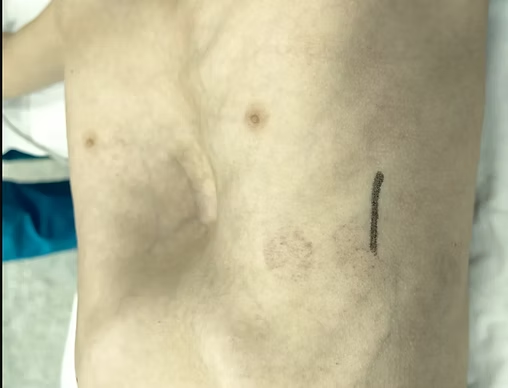
Chest wall deformity is a condition characterized by abnormal development or shape of the sternum, ribs, and costal cartilages, leading to visible changes in the chest wall that may affect the heart and lungs.
Harm: Direct Pressure and Indirect Impact
The harm can be divided into direct and indirect effects. Direct harm usually refers to direct physical compression of the heart and lungs, thereby causing symptoms like palpitations, shortness of breath, and breathing difficulties. Indirect harm is insidious and often overlooked; for example, pectus excavatum may lead to spinal curvature. When there is asymmetric depression on the chest wall, it can lead to uneven stress distribution on the spine, gradually resulting in scoliosis. In addition, psychological distress caused by appearance concerns also constitutes an important form of indirect harm.
Clinical Assessment and the “Separation of Symptoms”
Clinical manifestations of these conditions are often deceptive, as the severity of the visible deformity does not always align with the severity of the symptoms. A patient may have a deep depression with few complaints, while another with a mild defect suffers significant respiratory distress. Furthermore, psychological burden is also an important diagnostic factor; if a patient believes that their chest deformity affects their social life, medical intervention can be considered.
At The Institute of Chest Wall Surgery (ICWS), evaluation goes beyond subjective observation. It includes a comprehensive assessment of both physiological function and aesthetic impact. Because of this, treatment requires a whole-person approach that values how patients feel about their condition as much as test results.
Innovation in Surgical Correction at ICWS
ICWS conducts dedicated research on chest wall deformities and has developed surgical techniques aimed at correcting underlying skeletal abnormalities. Procedures such as the Wang procedure and the Wenlin procedure are examples of approaches designed to address pectus excavatum and pectus carinatum.
Early evaluation is recommended for individuals with chest wall abnormalities and physical symptoms to assess skeletal involvement and guide management decisions.